Memory Lane

March 29th, 2010

Kraft Mac'n'Cheese

Age 4: Bliss. Mac’n’cheese on a rainy day at my best friend’s house.

Someone asked me if I’d always “been into” food. I thought, “Not really…” and began reviewing my youthful ambitions: Ballerina. Disney Imagineer. Christian martyr.

Being a cook never crossed my mind. But then I went back and did some digging. If I had a bare wall and was allowed to decorate it only with the crispest snapshots of long-ago occurrences, food would be main point of focus. Some highlights in my food timeline:

Age 2: Buying powdered doughnuts at the drive-through convenience store in Miami.

Age 3: Sitting in the yard with my cousins, wearing a ratty t-shirt reserved for the stains from impossibly juicy mangos. Instead of mud pies, my grandmother and I made mud tamales.

Age 4: Tea time with my mother at 3:00pm, prompt: white toast with butter and guava jelly as the sun set in a blaze of orange. Tea time in Buenos Aires: white sliced bread, butter spread evenly to crust-less edges, cut into quarters.

Age 5: Realizing that not everyone had enough to eat. The supermarket in Granada was mostly dusty shelves. Encountering rice pilaf as an individual course in Mexico—and hating it.

Age 6: Experiencing fancy food: Guanábana bombe for a fancy dinner party, courtesy of my grandmother. Profiteroles bathed in warm chocolate sauce at a white tablecloth restaurant in Mexico City. Getting sick after eating marzipan grapes at a First Communion party. Discovering consommé.

Age 7: Eating birthday cake with Jell-o. Apparently a common occurrence at Mexican birthday parties. Feeling grown-up because I loved pistachio ice cream.

Age 8: Eating my first TV dinner—I just had to try that cherry cobbler.

Age 9: Reading the Anne of Green Gables and Little House on the Prairie series, mesmerized by the descriptions of food preparations. The Hobbit falls into this category as well.

Age 15: Reading Jeffrey Steingarten’s article about Roman pizza bianca, then devouring a 12-inch rectangle of said item at the forno in Campo dei Fiori. It was better than I’d dared to imagine.

Age 16: Discovering Roman peaches. I can still smell them.

Age 28: I don’t think I’d ever really enjoyed lobster until I had it cooked in briny ocean water in Cape Cod.

When I eat or cook it’s hard to stay in the present and not travel back in time. The smell, the taste, the touch—déjà vu and comfort.

Print This Post Print This Post

Eye of the Storm

March 13th, 2010

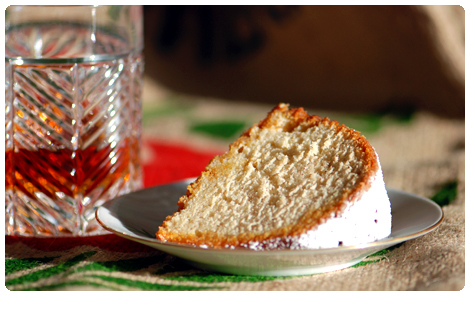
cake600My favorite way to eat coffee cake: smear both sides of the slice with butter and whatever topping crumbs you can collect, then griddle over medium-low heat until golden.

My apartment is overrun with cooking equipment and groceries. They’ve busted out of the kitchen cabinets and counters and begun squatting on the floor, on my dining room table, on top of the bookshelves… Developing recipes from home means I have to purchase groceries several times a week, and in some instances, more than once a day due to last-minute changes, “Hmm. I suppose I could use spaghetti instead of rotini here.”

I’ve been cleaning up as I go—never, never, ever allow pots, pans, etc. pile up in your sink until you’re done because I can tell you, woodland creatures are very unreliable and won’t clean up after you like they do for Snow White—but my kitchen can’t contain the abundance of paraphernalia I need for my assignments.

The eye of the storm? My coffee table. If I need a moment away from The Pit of Despair I sit on the couch and bask in the order of that table. New magazines, books, flowers, and most importantly, cake. Cake sitting pretty under that glass dome is one of the few things that centers me and irons out the crease between my eyebrows…I should make cake more often. Don’t you just love cake?

DSC_0133A moment of clarity.

Print This Post Print This Post

Bowled Over

March 11th, 2010

Asian style steak, rice and vegetable bowl

“Timid and shy and scared am I, of things beyond my ken,” sings Leisl in The Sound of Music.  I was painfully shy when I was little, and blushed every time I watched the rainy gazebo scene. I blushed even more furiously when I played Leisl to Ricky’s Rolf (Ricky had a crush on me and I despised him for it) at the end-of-the-year pageant in 1985. I was five years old.

Twenty-five years later, “timid” and “shy” are not words I would use to describe myself. I’d say Fräulein Maria lustily singing “I Have Confidence” provides a better illustration. Or maybe the scene where Captain Von Trapp finds Maria plunged into the deepest of curtseys in a ballroom of imagined guests.

Next weekend, my two-sizes-too-small kitchen will become a one-pupil-culinary school. I told my soon-to-be student to cook with confidence and above all, with an aim to pleasing herself. The Michelin inspector isn’t coming to dinner. Cook and eat what you like! And if things don’t turn out, so what? Clean up and give yourself a Do-Over (i.e. a reliable and satiating meal, like pizza with sausage and banana peppers).

Last weekend I was craving soy sauce and sticky rice, so I pulled this recipe together. I didn’t have a final product in mind, but this is what the craving turned into. Good things happen when you go with the flow.

MARINATED STEAK-&-VEGETABLE RICE BOWL
Serves 4 to 6
This would be really good with a fried egg on top. Sriracha can be found in the international or Asian foods aisle at most supermarkets—you’ll recognize it by its tomato-red color and rooster logo. Glutinous rice is short-grained and sticky, but if you can’t find it, use long-grain white rice, such as Carolina, or pick up a few containers at your neighborhood Chinese or Thai restaurant.

For the Rice
2 cups water
1½ cups glutinous or long-grain white rice
¼ teaspoon salt

For the Steak
1½ pounds flank steak
¼ cup soy sauce
2 tablespoons rice or white wine vinegar
2 tablespoons light or dark brown sugar
1 tablespoon toasted sesame oil
1 tablespoon grated fresh ginger
1 garlic clove, grated or minced
1 teaspoon Sriracha
4 teaspoons vegetable oil

For the Vegetables
1 medium cucumber, peeled, halved lengthwise, seeded, and cut into ¼-inch thick slices
1 tablespoon soy sauce
1 tablespoon rice or white wine vinegar
1 tablespoon toasted sesame oil
1 teaspoon light or dark brown sugar
4 cups shredded Napa or regular cabbage
2 medium carrots, grated
4 scallions, thinly sliced crosswise
1 cup cilantro leaves
8 ounces enoki mushrooms (optional)
½ cup dry-roasted peanuts, finely chopped or crushed

For the Spicy Mayo
½ cup mayonnaise
2 to 3 teaspoons Sriracha
2 teaspoons soy sauce
2 teaspoons lime juice
1 teaspoon toasted sesame oil
1 teaspoon light or dark brown sugar
½ teaspoon fish sauce (optional)

- Bring water to boil in a medium sauce pan. Add the rice and salt and boil until most of the liquid has evaporated and you can see small bubbles bursting on the surface of the rice. Immediately reduce the heat to the lowest setting, cover, and cook for 15 minutes. Fluff the rice with chopsticks or fork and serve.

- Cut the flank steak lengthwise into 3 long strips. Cut each strip in half crosswise to make 2- to 2.5-inch long steaks. Whisk the soy sauce, vinegar, sugar, sesame oil, ginger, garlic, and Sriracha together in a medium bowl.  Add the steaks, making sure they’re evenly submerged in the marinade. Cover the bowl with plastic wrap and refrigerate 30 minutes to 1 hour.

- Heat 2 teaspoons vegetable oil in a large nonstick skillet over medium-high heat until the oil begins to smoke. Add half of the steaks and cook until deep brown on both sides; 4 to 5 minutes per side. Transfer steaks to a plate and cover with foil. Repeat with the remaining 2 teaspoons vegetable oil and steaks.

- Whisk together the soy sauce, vinegar, sesame oil, and sugar in a small bowl. Add the cucumber slices and toss to coat.

- Whisk together the mayonnaise, Sriracha, soy sauce, lime juice, sesame oil, sugar, and fish sauce in a small bowl.

To assemble:  Place about ½ cup rice in a deep bowls or soup bowls. Slice the beef and divide evenly among plates. Arrange cucumbers, cabbage, carrots, scallions, cilantro, and mushrooms (if using) around rice and beef. Sprinkle with peanuts and serve with spicy mayo.

Print This Post Print This Post

Taste of Home

March 3rd, 2010

DSC_0018

Sometimes all you need is a home cooked meal, one that reminds you of mom making supper when you came home at the end of the school day. Nothing special or out of the ordinary, just something that says, “I’m home and the day is done.”  A Latin American friend and I were talking about how the fanciest meal at a restaurant couldn’t compare with a plate of simple food—and for us that meant anything that could be served with a heaping pile of rice and beans.

Carne chorizada is one of those unpretentious recipes that makes it into the dinner rotation at least twice a month at my house. It never gets boring, despite its brief and humble list of ingredients.

CARNE CHORIZADA
Serves 4 to 6
This recipe can also be made with meatloaf mix or a combination of ground beef and ground pork. If you can’t find fresh baby corn, substitute with 1½ frozen corn kernels. Achiote paste is a common ingredient in Nicaraguan dishes and can be found in Latin American supermarkets or the international aisle of the supermarket. It’s primarily a colorant, so if you can’t find it, don’t worry and proceed with the recipe.

2 pounds 85% lean ground beef
Salt and pepper
2 teaspoons Worcestershire sauce
1 teaspoon yellow mustard
1 tablespoon vegetable or corn oil
1 onion, finely chopped
3 small red potatoes, peeled and cut into ¼” dice (about 1½ cups)
2 medium carrots, peeled and cut into ¼” dice (about 1 cup)
8 ears baby corn, cut into crosswise into ¼” rounds
1 tablespoon achiote paste (optional)
3 tablespoons cider vinegar

- Using your hands, combine the beef with 1 teaspoon salt, ½ teaspoon pepper, Worcestershire sauce, and mustard in a large bowl.

- Heat the oil in a large skillet over medium heat until shimmering. Add the onion and cook until it’s softened and translucent, about 5 minutes.  Add the achiote paste (if using) and cook, stirring with a wooden cooking spoon, until the onions are evenly coated, about 1 minute.

- Increase heat to medium-high; add the beef, and cook, continuously stirring and breaking up any lumps, until the beef is no longer pink and most of the released juices have been absorbed. Stir in the vinegar, potatoes, carrots, and baby corn. Cover, reduce heat to low, and simmer until the vegetables are tender, about 15 minutes.  Remove skillet from heat, season to taste with salt and pepper and serve with white rice, black or red kidney beans, corn tortillas, and/or fried plantains.

Print This Post Print This Post

Where the Heart Is

January 24th, 2010

iglesia guadalupeIglesia Guadalupe in Granada, the city where I was born.

Though the Aeropuerto Internacional Augusto César Sandino has boasted jet bridges for several years now, I still expect to descend directly from the airplane onto the tarmac. In the 80s, excited family and friends would crowd together mosh pit-style on a terrace that overlooked the landing strip, everyone calling out and waving signs like crazed fans awaiting a celebrity’s arrival on the red carpet. But they were just waiting for their exiled own, coming home for the holidays.

granada2

Granada by coche, a horse-drawn carriage.

My trips to Nicaragua are bittersweet, especially during Christmas. My passport still marks me a citizen, and I do call it “home” whenever I refer to it, but Nicaragua hasn’t really been home for a very long time. I’ve moved on, but that first sighting of dusty olive green land from the scratched acrylic windows makes my heart cramp. Memories of trips when my family lived in the U.S. and Mexico during the 80s jumble with those from college breaks and the more recent perfunctory visits.  The childhood jaunts were all fun and adventure; I was mesmerized by ox-pulled carts on the main roads and street vendors pouring sodas into plastic bags—mini-udders that dispensed Coca-Cola. But even in the haze of little-kid wonderment, I knew everything was broken, and it made me deeply sad. It’s sadder today. But, there are uniquely beautiful and wow-worthy people and scenes to be found, and I appreciate them all the more.

san juanSan Juan del Sur, the beach town I grew up going to—and now a must-see on tourists’ itineraries.

kids with fishThe new spear fishing technique. We’d gone to the dock and  carefully packed our catch of the day in a large cooler when we spotted these kids. They were much hipper than us.

fish head

Red snapper, the catch of the day: $2/lb.

fishLunch at El Timón, an establishment in San Juan’s “pueblo.” Fresh-caught fish (snapper, in this photo) is coated in pinol, a corn and cacao-based meal, then fried and served with a tomato and onion sauce (salsa criolla), white rice, and plantain tostones.

mercadoTo market, to market…

papayasRipe papayas and watermelons.

starfruitMelocotones y limones (star fruit and limes).virgenLa asunción de la Santísima Vírgen María. The Virgin Mary is a religious and cultural symbol. This image of the assumption is found everywhere, even in markets.

muneco“La quema del viejo” — a local tradition.  These life-size dolls sit on people’s stoops or front yards, awaiting the new year. “El viejo” is stuffed with gunpowder and will be set on fire at midnight to blow out the old year and ring in the new.

sunsetSunset over the bay of Nacascolo.

Print This Post Print This Post

I Pita the Fool!

December 15th, 2009

puffed pita

I was flipping channels once upon a Saturday morning and landed on a “Baking with Julia” marathon. A gentleman with a Lloyd Christmas-meets-medieval pageboy haircut was making pita bread, and I thought, why not? I’ve never made pita bread.

PITA BREAD
Adapted from an episode of “Baking with Julia” with guests Jeffrey Alford and Naomi Duguid.
Bread baking is time consuming, so clear your calendar before you start.

2 ½ cups warm (about 110˚F) water
1 teaspoon dry yeast
2 ½ cups whole wheat flour
1 tablespoon kosher salt
1 tablespoon olive oil, plus additional for greasing bowl
About 6 cups unbleached all-purpose flour

Pita steps

- Preheat oven to 200˚F. As soon as it reaches temperature, shut the oven off. Dough likes to rise in warm places, and this guarantees a cozy resting place.

- Place warm water in large bowl. Sprinkle yeast over water and wait for it to dissolve, about 1 minute. Stir in the whole-wheat flour with a wooden spoon. “Stir 100 times in the same direction,” Alford recommended—this will prevent the gluten strands that begin to form from breaking.

- Cover bowl with plastic wrap and let rest in oven, 30 minutes and up to 8 hours.

- Remove bowl from oven and remove plastic. Stir in salt and oil.  One cup at a time, start stirring in the all-purpose flour. The dough will absorb different amounts of flour, depending on the day (dough is affected by numerous factors, including humidity – I added about 2 ½ cups flour when I made it). The dough will be sticky and shaggy, but will have some body (see photo 1).

- Turn the dough out onto a clean, dry, and well-floured surface. If you’ve never kneaded dough, here are some pointers: With the heel of your hand, push the dough away from you, firmly, as if you were scrubbing clothes the old-fashioned way, on a wooden plank. Fold the far end of the dough towards you, then turn it counter-clockwise, and repeat action.

- Now you’re ready: Begin kneading, adding more flour as necessary, until the dough has “a certain tension,” about 10 minutes (see photo 2). Normally, I would say the finished dough will have a smooth, satiny texture, but the whole wheat flour makes this dough a bit more like coarse leather. It will be tight, like a firm muscle.

- Place dough in a large, well oiled bowl. Lightly coat the dough with oil. Cover the bowl with plastic and place oven. Allow the dough to rise 2 to 3 hours, until it is doubled in size. An old tip: when the dough is ready, you can poke the dough and your finger’s indentation will remain.

- Preheat oven to 400˚F.  If you have a pizza stone, set it on the bottom third the oven. Otherwise, place an inverted rimmed baking sheet in the oven.

- Transfer the dough to a lightly floured surface. With a bench scraper, cut the dough in half. Cut each half into 8 pieces (see photos 3 and 4).

- Roll each piece into a ball.  Flatten each ball to about 4 inches in diameter.  Then, with a rolling pin, roll it out to about 7 inches in diameter (see photos 5 through 8).

- Carefully transfer 4 to 6 rounds to the pizza stone or baking sheet.  The pitas will puff after about 3 minutes.  Allow 30 seconds more and remove from oven. Stack pitas together and wrap in a towel to keep warm.

pita basket

- If you don’t want to use all the dough, save half and refrigerate. Use the next day. Alternatively, use it all, cool the pitas, and store them in plastic Ziploc bags in the freezer. Pop in the toaster or oven when you’re ready to eat them.

Print This Post Print This Post

Smut

December 2nd, 2009

huitla

Huitlacoche or (equally tricky to pronounce) cuitlacoche is a black, bulbous fungus that grows on corn. It looks revolting and distantly related to The Blob, so I can only assume that some poor Aztec thousands of years ago must have been either starving or being subjected to punishment when he first tried it. Famished daredevil or criminal, whoever was the first to eat it made a wonderful discovery. Sometimes referred to as smut, huitlacoche has also picked up a swankier moniker: corn truffle. Smut or truffle, huitlacoche is earthy, velvety, and intensely rich. In Mexico it’s sold canned at the grocery store (often with chiles and onions), but lucky for you, you don’t have to book a ticket to the D.F. to get it — simply order a few tins on Amazon with your next book or DVD purchase. It’s surprising, unexpected, and luxe layered in a quesadilla, stuffed into fried squash blossoms, wrapped inside crêpes, or tossed with pasta.

LINGUINE with HUITLACOCHE-MUSHROOM SAUCE
Serves 2

8 ounces linguine or spaghetti
1 tablespoon olive oil
1 onion, finely chopped
Salt and pepper
1 (10-ounce) box cremini or button mushrooms, cleaned and thinly sliced
4 garlic cloves, minced
1 (215 gram / 7.5 ounce) can huitlacoche, chopped
½ cup heavy cream
¼ cup grated Parmesan or Asiago cheese
4 scallions, thinly sliced

- Bring 4 quarts water to boil in a large pot.

- Heat olive oil in a large skillet over medium-high heat until shimmering. Add onion and ½ teaspoon pepper and cook until onion begins to soften, about 3 minutes.  Add mushrooms and sauté until golden brown, 6 to 8 minutes. Stir in garlic and cook until fragrant, about 1 minute,

- Stir in the huitlacoche and cream and simmer over medium heat until slightly thickened, about 5 minutes. Stir in cheese and season with salt and pepper.

- Add 1 tablespoon salt and pasta to boiling water and cook until al dente. Reserve ¼ cup pasta cooking water, drain pasta, and add to huitlacoche sauce in skillet. Toss to coat, adding reserved pasta water 1 tablespoon at a time if necessary. Serve in bowls and top with sliced scallions.

Print This Post Print This Post

Thank you!

November 30th, 2009

turkey

A one-of-a-kind balsamic reduction turkey.

Six courses! Each meticulously prepared and beautifully plated! Sparkling punch! Three desserts! And, a solid chocolate turkey! It was Thanksgiving 2.0, unfortunately, as the old saying goes, “too much wine before you dine / the photos come out less than fine.” Not a very old saying, but true, nonetheless. And so, of the luscious lobster bisque, asparagus tartare with frizzled leeks and oh-so-elegant balsamic reduction flourishes on the chilled plates, roasted turkey breast with dressing and cranberry-pear sauce, made-from-scratch green bean casserole (no can of condensed cream of mushroom soup, thank you very much), turkey confit and impossibly cheesy aligot, emerald green herb salad, pumpkin cheesecake with an ice skating rink-like topping of bourbon sour cream, raspberry tart, and chocolate-caramel-walnut tart, I have little physical evidence, but, cross my heart, everything was absolutely divine. My apologies to the chef for the shoddy reporting, but also heaps of thanks for a spectacular Thanksgiving.

cheesecake

tartThat thumbprint was my way of branding the tart. Clearly, it was hand-crafted and made with love.

choc turkey

Print This Post Print This Post

Sunday Not-So-Fun Day

November 11th, 2009

DSC_0109

Eating is an emotional activity. We all know the clichéd pint of ice cream in a woman’s clutches can mean only one thing: she’s having man trouble. A complex carb binge fills the vacuum of an impossibly frustrating workday. Chicken soup soothes the soul, etc. etc. For me, slipping on my yellow polka-dot apron and making (rather than eating) food is the best antidote to a poisonous mood.

Sunday evenings I typically shut down at around 3:00 or 4:00pm, especially during the fall and winter when it’s so freakishly dark I begin to wonder whether the apocalypse is at hand. I rarely venture out on a Sunday night, preferring to stay home and pout because the next day is Monday, and Mondays stink. But even in the drippiest of moods, I manage to peel myself off the couch to make dinner. On this week’s menu: roasted beets, sautéed beet greens, spiced nuts, and even apple-prune braised pork and cream of carrot for the next day. Now, don’t you think Negative Nancy deserves a gold star?

ROASTED BEET & ORANGE SALAD with SPICED NUTS
Serves 2
Serve salad alongside seared or grilled chicken breast. Extra lovely with a wedge of soft, peppery cheese like Constant Bliss.

For the Spiced Nuts
Spiced nuts can be made up to a week in advance and stored in a Ziploc bag.

1 large egg white
1 tablespoon water
2 cups walnuts or pecans
½ cup sugar
1 teaspoon cinnamon
¼ teaspoon cumin
¼ teaspoon coriander
¼ teaspoon ginger
¼ teaspoon salt

- Preheat oven to 300 degrees and adjust a rack to middle position.  Line a baking sheet with parchment paper and spray with nonstick cooking spray.

- Whisk egg white and water together in a medium bowl.  Add the nuts and toss to coat. Whisk the remaining ingredients together in a separate medium bowl.  Add the nuts and toss until well-coated with sugar mixture.

- With a rubber spatula, spread the nuts out on the prepared baking sheet. Bake until the nuts are crisp and fragrant, about 45 minutes.

- Transfer the baking sheet to a cooling rack and cool completely. Break nuts apart with your hands and store in a Ziploc bag.

For the Beet Salad
Warning! If you have latex gloves, use them, as the beets will stain your fingers. You might want to wear an old t-shirt, too. You’ll only need 3 roasted garlic cloves; use the remaining garlic cloves as a spread on crusty buttered bread.

1 bunch beets with greens attached (4 to 6 golf ball-sized beets), beets scrubbed and greens thoroughly washed
1 head garlic
5 tablespoons olive oil
1 orange
3 tablespoons sherry vinegar
1 teaspoon Dijon mustard
Salt and pepper

- Preheat oven to 400 degrees and adjust a rack to middle position. Trim the greens from the beets, discard the stems, and coarsely chop the greens. Trim off the part of the beet that looks like a rat tail. Wrap the beets individually in foil, place them directly on the oven rack, and roast until fork-tender, 1 to 1 ½ hours. Cut off the top quarter of the head of garlic. Drizzle with 1 tablespoon oil, cover with trimmed top, wrap in foil, and roast alongside the beets.

- When cool enough to handle, unwrap the beets, peel, and cut them into ½-inch-thick slices. Unwrap the garlic and squeeze out 3 cloves. Reserve beets and garlic in separate bowls.

- Peel the orange with a sharp paring knife, making sure to remove the rind and the white pith.  Working over a bowl, cut between the membranes to remove the orange segments. Reserve the segments and squeeze the juice from the orange.

- Add vinegar and mustard to the bowl with garlic and whisk to combine. Slowly drizzle in remaining 4 tablespoons olive oil and whisk to emulsify. Season with salt and pepper. Toss beets with 1 to 2 tablespoons of the mixture.

- Heat 3 tablespoons of the vinaigrette in a large skillet and sautée the chopped greens until wilted, about 5 minutes. Season with salt and pepper. Transfer to colander set over large bowl. Drizzle with orange juice.

- Arrange the wilted greens, sliced beets, and orange segments on plates. Garnish with spiced nuts and serve.

Print This Post Print This Post

Winner, Winner, Chicken Dinner

November 2nd, 2009

BBQ Chicken 10-29-09

I’m always on the lookout for ingredients that’ll cover up chicken breasts – i.e. my least favorite thing to eat other than tripe – and the ketchup-prune preserve sauce I glazed that meatloaf with a few days ago was a pretty convincing disguise. Shred your leftover chicken and make a sandwich for lunch the next day. Inspired, I know. And yes, of course, there’s bacon in it.

SWEET & TANGY ONION-SMOTHERED CHICKEN
Serves 4 (or 2 plus leftovers)
You can substitute apricot jam for the prune preserves.

1 cup ketchup
½ cup prune preserves or jam
¼ cup brown sugar
3 tablespoons cider vinegar
¼ teaspoon red pepper flakes
4 bacon slices, coarsely chopped
2 medium onions, peeled, halved lengthwise, and thinly sliced
Salt and pepper
4 bone-in, skin-on chicken breasts, halved crosswise

- Whisk the ketchup, preserves, 3 tablespoons brown sugar, vinegar, and red pepper flakes in a small bowl; set aside.

- Cook the bacon in a large skillet over medium heat until crispy, 6 to 8 minutes. Transfer bacon pieces to a paper towel-lined plate with a slotted spoon; reserve. Pour the bacon fat out into a bowl; reserve.

- Add 1 tablespoon of the reserved bacon fat to the now empty skillet and heat over medium-high heat until shimmering.  Add the onions, remaining 1 tablespoon brown sugar, ¼ teaspoon salt, and ¼ teaspoon pepper and cook until the onions begin to soften, about 5 minutes. Cover and continue cooking until completely softened, about 5 minutes more.  Transfer the onions to a bowl.

- Add an additional tablespoon of the reserved bacon fat to the now empty skillet. Season the chicken with salt and pepper and cook, skin-side down, until browned, about 5 minutes. Add the onions to the chicken. Pour the sauce over the chicken and onions, cover, and cook on medium-low heat until the chicken is cooked through, 15 to 20 minutes (temperature should read 160˚F). Transfer the chicken to a platter and cover it loosely with foil.  Increase the heat to high and simmer the sauce until slightly thickened, about 5 minutes. Stir any accumulated chicken juices to sauce and pour over chicken. Sprinkle with reserved bacon and serve.

Print This Post Print This Post